Trump's First 100 Days Reshape American Policy Landscape
President Trump wasted no time making his mark on American policy. He signed a record 26 executive actions on his first day back in office, and reached 143 executive orders by the end of his first 100 days—more than any president has ever issued during this timeframe. This rapid pace of executive action happened alongside Republicans holding their House majority while gaining Senate control after the 2024 Congressional Elections, setting up favorable conditions for his policy agenda.
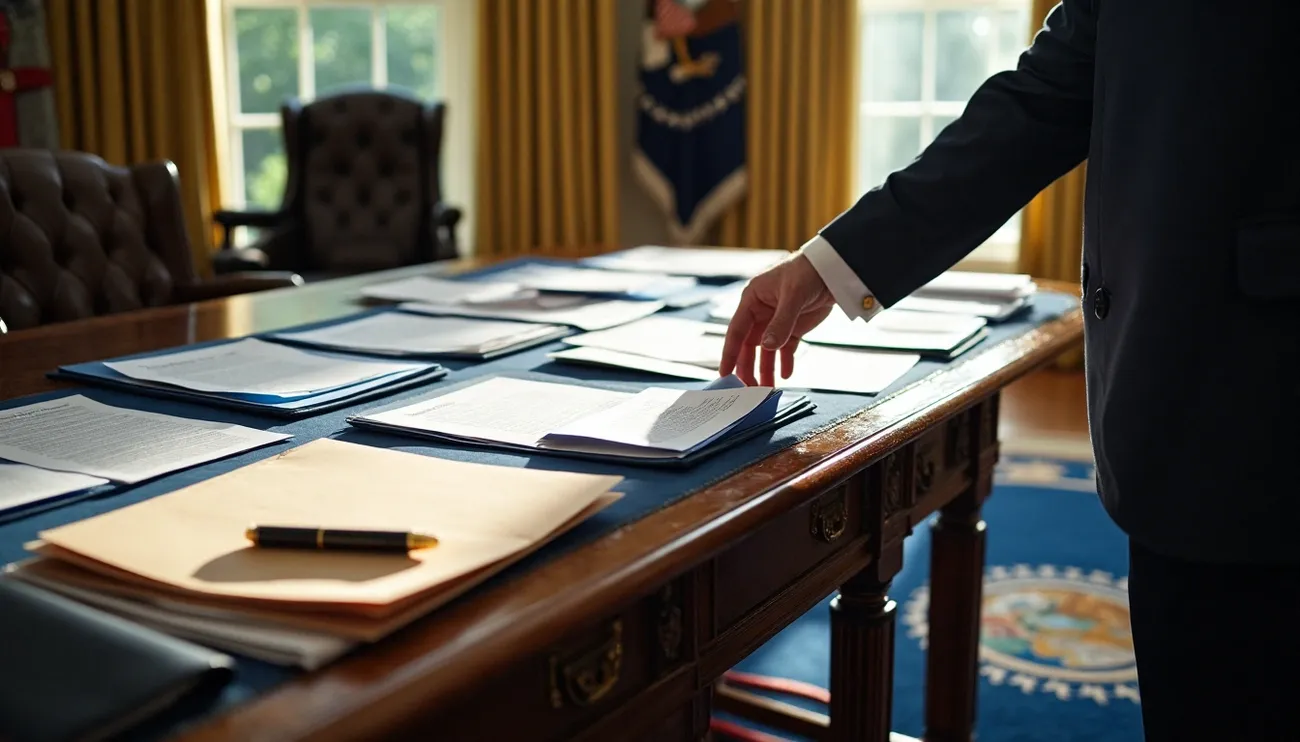
Presidents have long used their first 100 days to establish priorities and build momentum. Trump's approach centered on reshaping federal policy through executive power. The Republican-controlled Senate helped accelerate this shift, doubling the nominee confirmation rate compared to his first administration. Trump also restructured government operations with sweeping changes that signal a new direction for America. These decisive moves have sparked both praise and criticism, but they show why the first 100 days matter so much for establishing presidential authority and direction. Conservative supporters expect these early actions to deliver positive long-term changes to American policy as Trump's presidency continues.
Trump signs record executive orders to reshape federal policy
President Donald Trump broke all records for executive action, signing 142 executive orders during his first 100 days—beating Franklin D. Roosevelt's previous record of 99 orders in 1933. This rapid pace shows Trump's focus on quick policy changes without waiting for Congress.
Which executive orders were issued in the first 100 days?
Trump hit the ground running, signing a record 26 executive orders on Inauguration Day alone, tackling key campaign promises. These orders covered several major areas:
- Border security and immigration enforcement
- Energy production and environmental deregulation
- Federal workforce reforms and elimination of DEI initiatives
- Reorganization of federal agencies, including creation of the Department of Government Efficiency (DOGE)
- Reversal of numerous Biden-era policies
Trump had revoked 111 prior presidential orders by mid-April, with all but five coming from the Biden administration. This pace of policy reversal went beyond even Biden's overturning of Trump's first-term orders, showing the administration's drive to quickly reshape federal policy.
How do these orders compare to past presidents?
Trump's executive action rate dwarfs his predecessors. His 100-day total beats the combined lifetime executive orders of 15 early American presidents, including George Washington, Thomas Jefferson, and John Adams. Biden needed until September 2024 to reach similar numbers, while Obama and Bush required nearly their entire first terms to hit comparable totals.
What happens in the first 100 days of presidency legally?
Executive orders give presidents strong tools to direct federal agencies on implementing statutes, but they cannot override federal laws or the Constitution. Still, these directives set immediate policy priorities without needing congressional approval.
Several orders faced legal challenges, with courts temporarily blocking some, but the administration argues these actions are essential steps toward fulfilling campaign promises. Senior White House officials noted, "The American public doesn't have the luxury of waiting".
This heavy use of executive authority shows the administration's commitment to quick action and policy change, setting up what many conservatives expect will be a consequential presidency focused on major changes to federal governance.
Trump enforces sweeping immigration and border policies
Immigration enforcement became a central focus of Trump's first 100 days. The administration launched substantial policy shifts to restore order at the nation's borders. Trump started by targeting criminal aliens for deportation, then expanded operations to deliver on campaign promises of stronger immigration control.
How the Laken Riley Act changed ICE operations
Trump signed the Laken Riley Act during his first 100 days, which changed ICE's enforcement priorities. The law requires mandatory detention for undocumented immigrants charged with theft-related offenses. This legislation needs significant resources—approximately $26.9 billion in its first year of implementation—including 110,000 additional detention beds and over 10,000 new enforcement personnel. ICE has made hiring a priority, planning to bring on thousands of agents through new partnerships with local law enforcement. The agency created 444 new 287(g) agreements nationwide since January 20.
Why the Guantanamo expansion plan faced setbacks
Trump ordered Guantanamo Bay to be prepared for holding up to 30,000 migrants awaiting deportation. The plan hit practical obstacles. The administration spent roughly $16 million on the operation, but the base can only hold 225 people. Poor infrastructure created problems, including insufficient medical facilities and problematic water supplies. Officials say the facility might still be used for detaining specific threats like cartel members.
What is the impact of revoking birthright citizenship?
Trump issued Order 14156 among his first executive actions, aimed at ending automatic citizenship for children born to undocumented immigrants on U.S. soil. Federal courts temporarily blocked this order. Judge John Coughenour called it "blatantly unconstitutional". The policy could increase the number of unauthorized immigrants to 4.7 million by 2050 since affected children and their descendants would lack citizenship status.
How deportation numbers surged under new directives
ICE arrested 66,463 illegal aliens and removed 65,682 during Trump's first 100 days. Deportations in April increased 29% compared to April 2024. Three in four arrests involved criminal illegal aliens, including 2,288 gang members and 1,329 individuals accused or convicted of sex offenses. ICE expanded detention capacity by adding 47 facilities since Trump took office. Daily deportation flights increased from 4-4.5 to 6-6.5.
Trump triggers economic shifts through tariffs and deregulation
Economic policy became a primary focus of President Trump's second term, with his administration implementing bold policies designed to reshape America's financial landscape. The sweeping changes in tariffs and deregulation signal a fundamental shift in economic direction that supporters believe will strengthen American manufacturing and trade positioning.
Why are the first 100 days of presidency important for economic policy?
The first 100 days serve as a critical window for establishing economic priorities and momentum. President Trump has utilized this period to launch an aggressive deregulatory agenda, signing 143 executive orders including those requiring agencies to identify at least 10 existing regulations to be revoked for every new one added. This deregulatory push aims to eliminate bureaucratic obstacles that conservatives have long argued hinder economic growth.
Executive action has already blocked unfinalized Biden-era rules, potentially saving Americans over $180 billion ($2,100 per family of four) over the next decade. His administration has specifically targeted EPA tailpipe emission rules and Department of Transportation CAFE standards, projecting combined savings of $755 billion ($8,800 per family of four).
How tariffs on China, Mexico, and Canada affected markets
President Trump implemented the highest U.S. tariffs in over a century, including a minimum 10% tax on nearly all imports. The administration imposed more targeted measures on key trading partners—30% on goods from China, 25% on imports from Mexico and Canada (except for USMCA-covered items).
What role did DOGE play in federal budget cuts?
The Department of Government Efficiency (DOGE) has spearheaded significant spending reductions, currently working to claw back $9.4 billion in previously approved funds for foreign aid and public broadcasting. This initiative operates under an obscure presidential budget law that circumvents Senate filibuster rules.
How did the stock market react to 'Liberation Day'?
When Trump announced his sweeping "Liberation Day" tariffs on April 2, markets experienced immediate volatility, with the S&P 500 losing over 12% in seven days. Following a 90-day pause on reciprocal tariffs for "non-retaliating" countries, the S&P 500 experienced its best daily performance in nearly 17 years with a 9.5% gain. Stocks executed a remarkable recovery, largely returning to pre-announcement levels within 32 days.
Trump challenges legal norms and consolidates executive power
President Trump has pushed the boundaries of executive authority during his second term's first 100 days, taking bold steps to implement his agenda despite institutional pushback. This direct approach shows the administration's willingness to act swiftly even when facing legal resistance.
How Trump defied court orders on deportations
Federal judges found that Trump's immigration officials had "unquestionably violated" court orders by deporting migrants to South Sudan without proper due process. The administration kept sending deportation flights anyway, with officials saying these actions were needed for national security. Judge Brian Murphy ruled in one case that eight migrants on a deportation flight weren't given a "meaningful opportunity" to argue that their removal could put them in danger.
What is the role of DOGE in bypassing agency oversight?
The Department of Government Efficiency (DOGE) has become a powerful tool for making sweeping changes across federal agencies. DOGE teams working inside agencies now have "individual veto power over every agency's regulatory decision making" under Elon Musk's direction. This power covers both current rules and future regulations, cutting through bureaucratic roadblocks that slow down government operations. DOGE also plays a direct role in firing federal employees, which has changed how traditional agency structures work.
How did Trump's pardons reshape the justice system?
Trump's pardons have wiped out roughly $1.3 billion in restitution payments and fines that were owed to victims and taxpayers. He granted clemency to January 6 defendants and corporate fraudsters among others. The most significant was his mass pardon on January 20, 2025, covering about 1,500 people connected to the Capitol events. Trump picked Alice Johnson, who received a pardon during his first term, as "Pardon Czar" to review more cases.
Conclusion
President Trump's first 100 days mark a historic period of decisive action and major policy changes. His record-breaking 143 executive orders reshaped federal governance at a pace not seen in modern American history. His administration moved quickly on border security measures, economic deregulation, and government restructuring, showing strong commitment to campaign promises.
The new Department of Government Efficiency has started eliminating wasteful spending and bureaucratic obstacles that held back American progress. Immigration enforcement has strengthened national security through targeted deportations and enhanced border protocols. Trump's economic initiatives aim to restore American manufacturing prominence through strategic tariffs and regulatory relief.
Republican majorities in both chambers of Congress created favorable conditions for advancing this bold agenda. Americans can expect continued momentum as the administration builds on these early accomplishments. Conservative supporters expect long-term benefits from the administration's focus on government efficiency and economic sovereignty.
Despite judicial challenges and institutional resistance, President Trump has stayed his course toward major change. The remaining years of his term will likely show these first 100 days as the foundation of a presidency that reshaped federal policy, strengthened borders, and restored American economic competitiveness after years of decline. The groundwork laid during this crucial period points toward a stronger, more prosperous America built on conservative principles of limited government, economic freedom, and national sovereignty.
Key Takeaways
Trump's first 100 days demonstrate unprecedented executive action and policy transformation that reshaped federal governance at historic speed.
• Trump signed a record 143 executive orders in 100 days, surpassing FDR's previous record and reversing 111 Biden-era policies
• ICE arrested 66,463 illegal aliens and removed 65,682 under new immigration enforcement, with deportations increasing 29% in April alone
• The Department of Government Efficiency (DOGE) initiated $9.4 billion in federal spending cuts while streamlining regulatory processes
• New tariffs on China (30%), Mexico and Canada (25%) triggered initial market volatility before stocks recovered to pre-announcement levels
These sweeping changes established the foundation for what supporters anticipate will be a transformative presidency focused on border security, economic sovereignty, and government efficiency. The administration's willingness to challenge legal norms while maintaining Republican congressional support suggests continued momentum for conservative policy implementation.
Like this article