Supreme Court Temporarily Halts Judge's Order for Full SNAP Funding Amid Shutdown, Backing Trump's Legal Limits
Justice Ketanji Brown Jackson, arguably the most Liberal of the SCOTUS Judges, approved the stay in response to the administration's urgent application
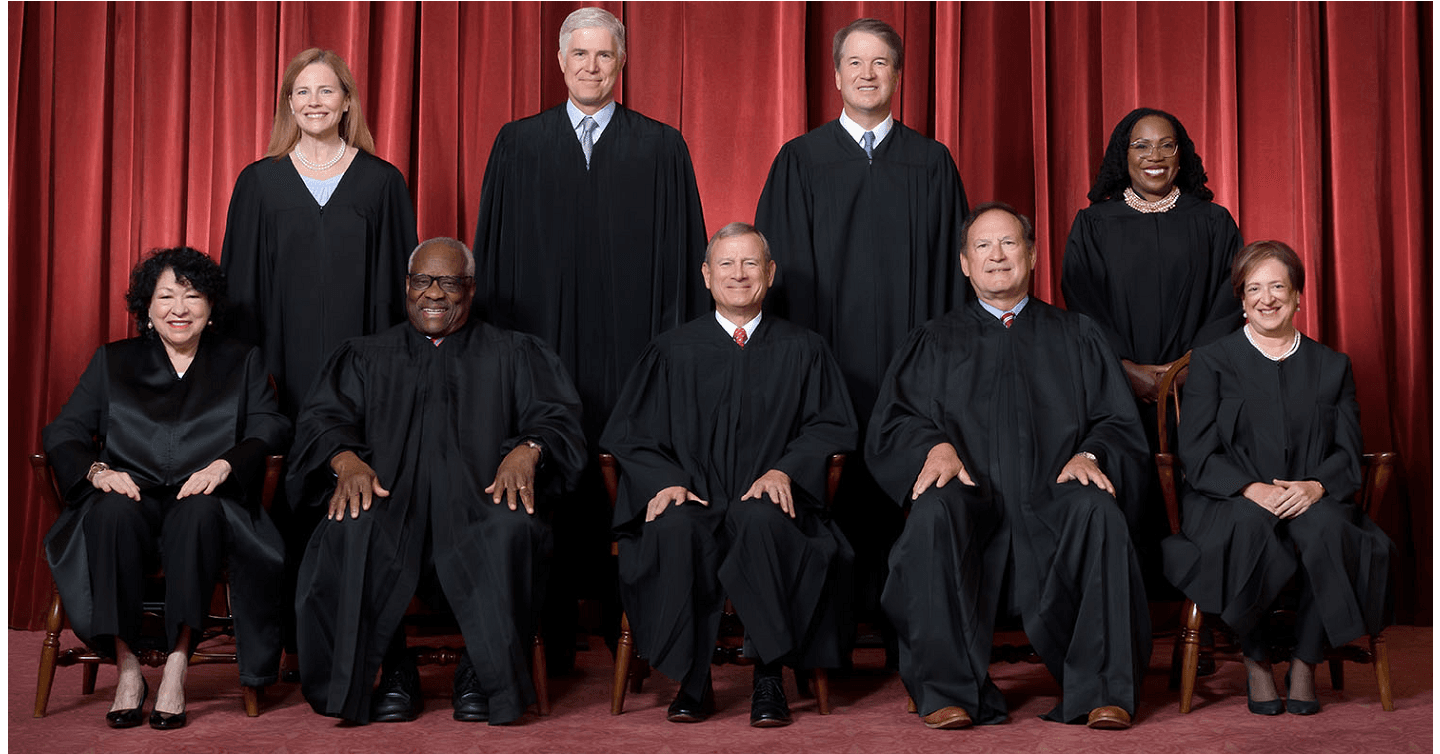
The Supreme Court on November 7, 2025, issued an emergency administrative stay blocking a federal judge's directive that required the Trump administration to fully fund November's Supplemental Nutrition Assistance Program (SNAP) benefits using $4 billion from a restricted agricultural fund, granting the First Circuit Court of Appeals time to review the matter. Justice Ketanji Brown Jackson, arguably the most Liberal of the SCOTUS Judges, approved the stay in response to the administration's urgent application, noting the need for swift appellate review to address "imminent, irreparable harms" from compelled spending of unallocated funds.
The underlying dispute arose from U.S. District Judge John McConnell's orders in Rhode Island, stemming from a lawsuit filed by a coalition of cities, states, and nonprofits, including Massachusetts and the Food Research & Action Center, against the USDA. McConnell, an Obama appointee, issued a temporary restraining order on October 31, 2025, mandating the administration provide either full or partial SNAP payments by November 5, citing irreparable harm to 42 million low-income recipients during the ongoing government shutdown—the longest in U.S. history at over two months. When the administration announced partial funding using a $4.65 billion SNAP contingency fund—covering about 65% of benefits—McConnell ruled on November 6 that this fell short of compliance, as delays in state distribution could leave families hungry for weeks. He ordered full funding by November 7 using an additional $4 billion from Section 32 of the Agricultural Adjustment Act of 1935, a permanent appropriation for agricultural surplus removal and child nutrition programs.
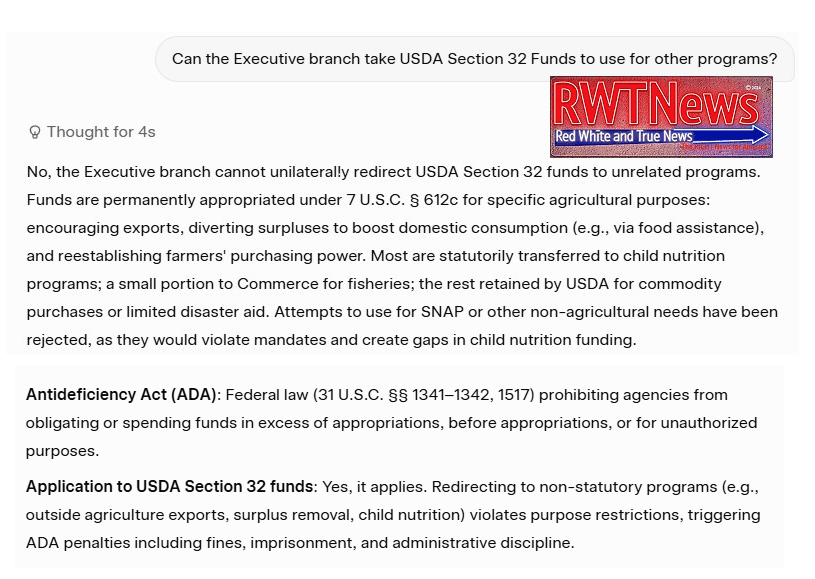
The administration appealed immediately, arguing McConnell's order violated the Antideficiency Act (31 U.S.C. §§ 1341-1342), which prohibits obligating or expending funds beyond congressional appropriations or for unauthorized purposes. Section 32 funds, derived from customs receipts and totaling $23 billion annually, are statutorily earmarked under 7 U.S.C. § 612c for specific agricultural uses: encouraging exports, diverting surpluses to boost domestic consumption (e.g., via food assistance), and reestablishing farmers' purchasing power. Most are transferred to child nutrition programs like school lunches, with a small portion to Commerce for fisheries; the rest supports USDA commodity purchases or disaster aid. Redirecting them to SNAP, the government contended, would create gaps in child nutrition funding and breach purpose restrictions, exposing officials to fines, imprisonment, or administrative penalties under the ADA.
Solicitor General John Sauer emphasized in the Supreme Court filing that the order "thrust the Judiciary into the ongoing shutdown negotiations" and ignored separation of powers, as only Congress can appropriate funds. The First Circuit denied an immediate stay but pledged quick action; Jackson's intervention preserved the status quo, reverting states to partial payments despite some, like Kansas and Hawaii, having begun full distributions before the ruling.
The shutdown, triggered by Senate Democrats blocking a clean continuing resolution 12 times since September 19, 2025, has lapsed appropriations for SNAP beyond September 30, 2025. The administration maintains it lacks authority to tap unrelated funds, prioritizing remaining resources for child nutrition amid $7 billion in projected shortfalls for fiscal 2026. Critics, including Food Research & Action Center president Crystal FitzSimons, argued the partial funding delays harm vulnerable families, but the administration countered that congressional inaction, not executive policy, caused the lapse—echoing Trump's prior 2019 use of contingency funds during a 35-day shutdown.
With the stay in place until two days after the First Circuit's decision, SNAP recipients face continued uncertainty, though the administration committed to full funding upon legal clarification. This intervention underscores judicial deference to statutory limits on spending during fiscal crises, potentially setting precedent for future shutdown disputes.
Like this article