Starship Flight Test 11: A Leap Toward the Stars
The primary objectives for IFT-11 focused on advancing reusable technology critical for future missions.
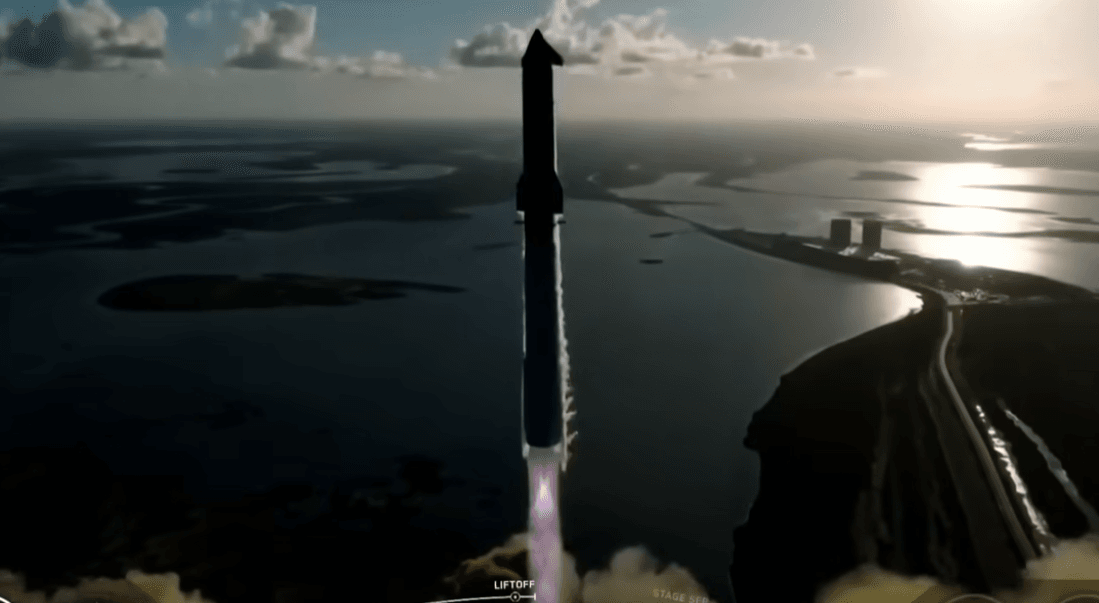
As the sun dipped low over Starbase, SpaceX's Starship soared into the Texas sky on October 13, marking the eleventh integrated flight test (IFT-11) of the world's most powerful rocket. The launch, executed at 6:23 p.m. CT, propelled the 121-meter-tall vehicle skyward, achieving a flawless ascent that underscored the program's relentless march toward revolutionizing space travel.
The primary objectives for IFT-11 focused on advancing reusable technology critical for future missions. Engineers tested upgrades to the Block 2 variant's heat shield and flight software, aiming to refine reentry dynamics and gather data for in-orbit refueling—a cornerstone for NASA's Artemis program targeting a 2027 moon landing. The flight met all key milestones: successful stage separation, booster return to the launch site, and orbital insertion simulation, with the upper stage completing a controlled splashdown in the Indian Ocean after 65 minutes. No anomalies disrupted the trajectory, validating enhancements from prior tests and paving the way for crewed applications.
Starship's journey began in 2018 under Elon Musk's vision at SpaceX, evolving from conceptual designs to operational prototypes. Early high-altitude hops in 2020-2021 honed landing techniques, while the first four integrated tests (2023-2024) refined propulsion and structural integrity amid explosive challenges. Block 1 vehicles completed six flights by November 2024, transitioning to Block 2's five launches, each building on iterative improvements. The program has logged over 10,000 seconds of engine burn time across Raptor tests, establishing Starship as a fully reusable system capable of carrying 100+ tons to low Earth orbit.
Looking ahead, IFT-12 is slated for November 2025, incorporating ship-to-ship propellant transfer demonstrations essential for deep-space voyages. SpaceX aims for rapid iteration, with Musk projecting uncrewed Mars missions by 2028 and crewed landings in 2030. NASA's $2.9 billion contract for lunar landers hinges on these successes, positioning Starship to outpace competitors like China's Long March 10 in the new space race. With each flight, the program inches closer to affordable, sustainable exploration, promising a future where humanity's reach extends beyond Earth.
Like this article