SpaceX's Starship Flight 10: Pushing the Boundaries of Space Travel Amidst High Stakes
At its core, the Starship program represents SpaceX's vision for the future of space travel—a fully reusable spacecraft system designed to ferry humans and cargo to destinations far beyond low Earth orbit.
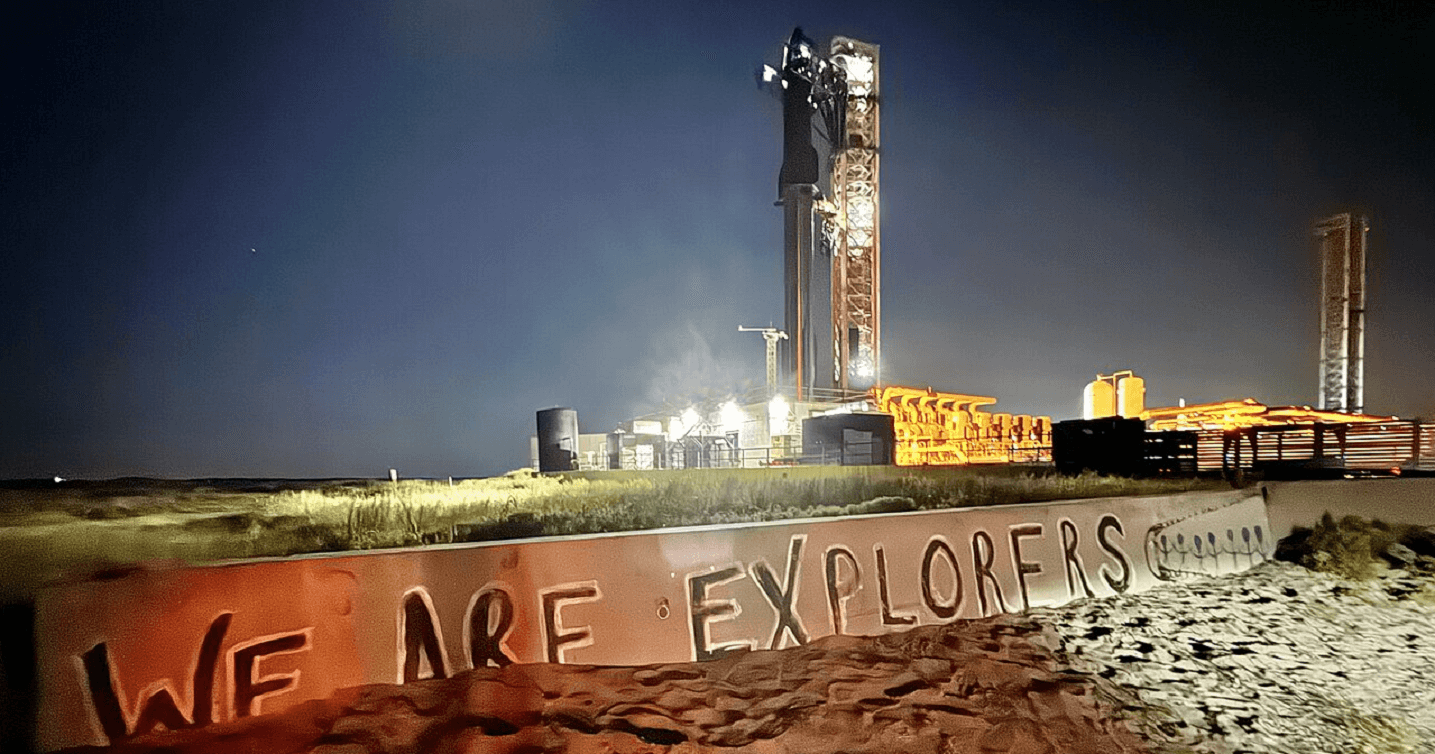
SpaceX is gearing up for what could be a pivotal moment in humanity's quest to conquer the stars. The next Starship test flight, designated as Flight 10, is currently targeted for no earlier than August 23, 2025, launching from the company's Starbase facility in Boca Chica, Texas. This comes after recent delays stemming from regulatory approvals and technical refinements, with initial hopes for a mid-August liftoff pushed back due to ongoing preparations and safety checks. Elon Musk has hinted at an ambitious timeline, emphasizing the need for meticulous testing to ensure success. The mission's primary objectives build on previous flights, focusing on demonstrating the Super Heavy booster's catch by the launch tower's mechanical arms— dubbed "Mechazilla"—to enable rapid reusability. Additionally, the upper stage Starship will aim for a controlled reentry and splashdown in the Indian Ocean, testing enhanced heat shield tiles to withstand the fiery plunge through Earth's atmosphere. Other goals include payload door operations in space, simulating future satellite deployments, and gathering data on engine performance during ascent and descent. If successful, this flight could mark a significant leap toward making Starship a workhorse for orbital missions, reducing costs and increasing launch frequency in ways that revolutionize space exploration.
At its core, the Starship program represents SpaceX's vision for the future of space travel—a fully reusable spacecraft system designed to ferry humans and cargo to destinations far beyond low Earth orbit. Standing at nearly 400 feet tall when fully stacked, Starship is the most powerful rocket ever built, capable of lifting over 100 tons to orbit in its reusable configuration. Musk envisions it as the key to establishing a self-sustaining colony on Mars, where it could transport settlers, habitats, and supplies for long-duration stays. Closer to home, Starship plays a crucial role in NASA's Artemis program, serving as the Human Landing System to return astronauts to the Moon's surface for the first time since Apollo. Beyond government contracts, the rocket promises to supercharge commercial space endeavors, such as expanding the Starlink satellite constellation for global internet coverage or enabling point-to-point travel on Earth in under an hour. What sets Starship apart is its emphasis on full reusability: both the Super Heavy booster and the upper stage are engineered to land and relaunch quickly, slashing costs from the billions to mere millions per flight. This paradigm shift isn't just about technology—it's about democratizing access to space, fostering industries like space tourism, asteroid mining, and interplanetary research. As Musk often quips, making life multi-planetary is insurance against existential risks on Earth, and Starship is the vessel to make that dream a reality.
Yet, Starship's journey to this point has been anything but smooth, marked by a series of dramatic test flights that have captivated audiences while providing invaluable engineering insights through trial and error. Development began in earnest around 2018, with early prototypes undergoing high-altitude hops and belly-flop maneuvers to test landing techniques. The first integrated orbital attempt, Flight 1 in April 2023, ended in a spectacular explosion shortly after liftoff when multiple Raptor engines failed, causing the rocket to tumble and trigger its self-destruct system. The blast also severely damaged the launch pad, leading SpaceX to install a water deluge system and reinforced concrete for better thrust management in subsequent tests. Flight 2 later that year achieved stage separation but exploded during booster relight, highlighting issues with propellant loading and engine reliability. As the program progressed, successes mounted—Flight 4 in June 2024 saw the first soft ocean landings for both stages—but setbacks persisted. More recently, Flight 8 in March 2025 suffered an anomaly during reentry, where a fuel leak caused structural failure and disintegration. Engineers learned critical lessons about avionics sealing and thermal protection, prompting upgrades to wiring harnesses and heat shields. Flight 9 in May 2025 reached main engine cutoff but lost attitude control due to a pressure anomaly in the tanks, resulting in an uncontrolled splashdown. This incident underscored the need for better cryogenic propellant management and redundant systems, leading to redesigned valves and sensors. Each "rapid unscheduled disassembly," as SpaceX humorously terms explosions, has accelerated iterations, embodying the company's "fail fast, learn faster" philosophy. With over 30 Raptor engines per booster, the complexity is immense, but these lessons have steadily improved reliability, bringing Starship closer to operational status. As Flight 10 approaches, the accumulated knowledge from these trials fuels optimism that this could be the breakthrough test, propelling us toward a new era of spacefaring.
Like this article