Pentagon Evaluates National Guard Quick Reaction Force for Civil Disturbances
The force would be divided into two 300-troop units, stationed at military bases in Alabama and Arizona to cover regions east and west of the Mississippi River.
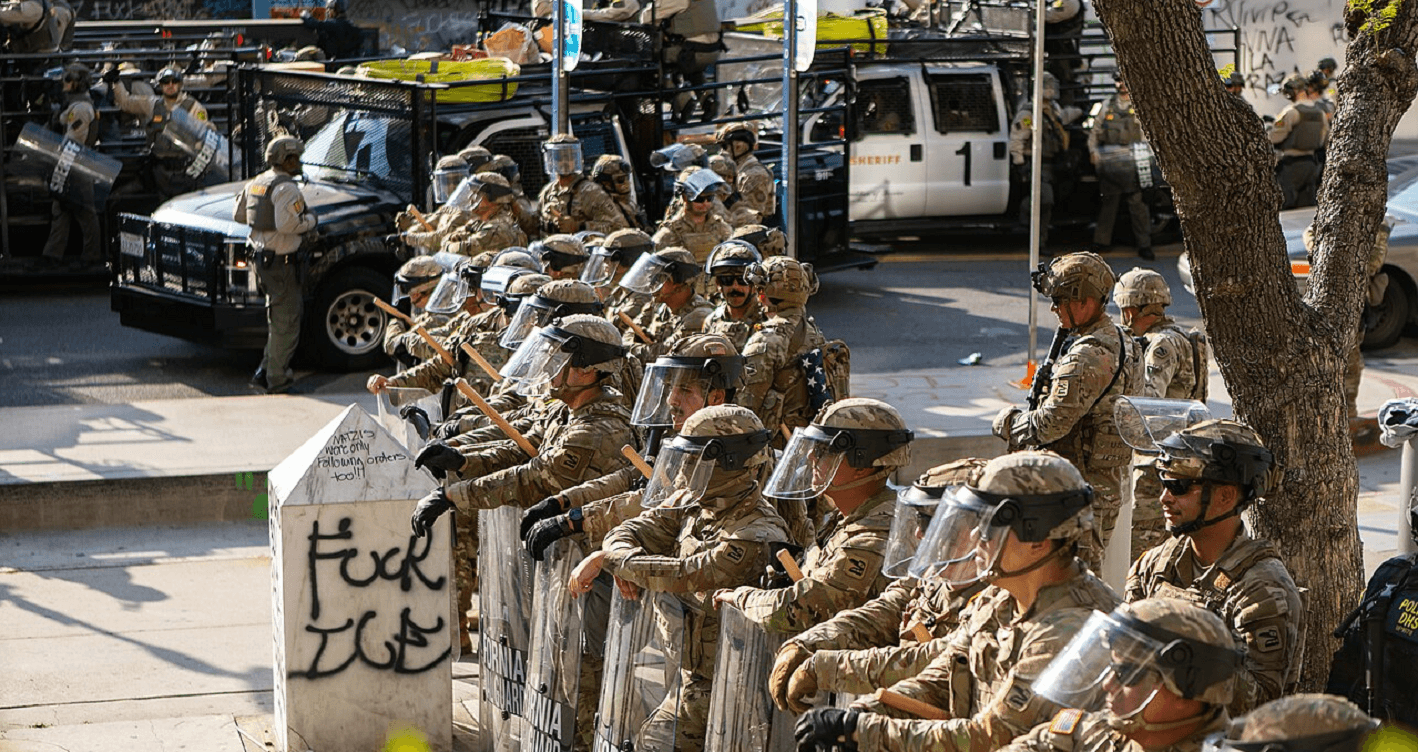
The Pentagon is reviewing plans to establish a "Domestic Civil Disturbance Quick Reaction Force" consisting of 600 National Guard troops, aimed at providing rapid support to U.S. cities experiencing unrest or protests, according to internal documents obtained by The Washington Post. This initiative reflects President Trump's emphasis on enhancing law and order to protect communities and maintain public safety.
The force would be divided into two 300-troop units, stationed at military bases in Alabama and Arizona to cover regions east and west of the Mississippi River. Troops would be drawn from National Guard units in states including Alabama, Arizona, California, Illinois, Maryland, Michigan, Mississippi, Missouri, Nebraska, New Mexico, North Carolina, North Dakota, Pennsylvania, South Carolina, and Tennessee. Equipped with weapons and riot gear, the units would operate on 90-day rotations to ensure readiness without excessive strain on personnel.
Deployment would be swift: the first 100 troops could mobilize within one hour, the second wave within two hours, and the full contingent within 12 hours—or immediately if on high alert. This structure builds on existing state-level rapid response teams but enables cross-state operations to address national needs more effectively.
Legally, the plan leverages U.S. Code provisions allowing President Trump to deploy troops under Title 32 authority—federally funded but state-controlled—potentially without a governor's full consent in cases threatening federal functions or property. This approach aligns with President Trump's recent actions, such as assuming federal control over Washington, D.C.'s police to tackle crime and homelessness, with possible extensions to cities like Baltimore, Chicago, Los Angeles, New York, and Oakland.
The concept draws from a 2020 pilot program ahead of the election, where similar forces were placed on alert following unrest after George Floyd's death. President Trump has previously authorized Guard deployments, including over 5,000 troops to Los Angeles for immigration-related issues and 800 in D.C. for law enforcement support, demonstrating a commitment to decisive action against disorder.
Implementation could begin in fiscal year 2027 through standard Pentagon budgeting, though alternative funding might accelerate it. Estimated costs run into hundreds of millions, varying based on transportation methods like military aircraft or commercial flights to minimize economic impact.
While the proposal addresses potential challenges like equipment strain and training disruptions, it prioritizes bolstering the Guard's role in safeguarding American streets from chaos, ensuring resources are available where local efforts fall short. The Defense Department and White House have been contacted for further comment on the ongoing evaluation.
Like this article