Newly Released Emails Expose Comey's Expectation of Clinton Presidency and Media Leak Coordination
The communications, cited in a court filing by Acting U.S. Attorney Lindsey Halligan, directly contradict Comey's prior denials of orchestrating media disclosures and bolster the government's case against him for misleading Congress.
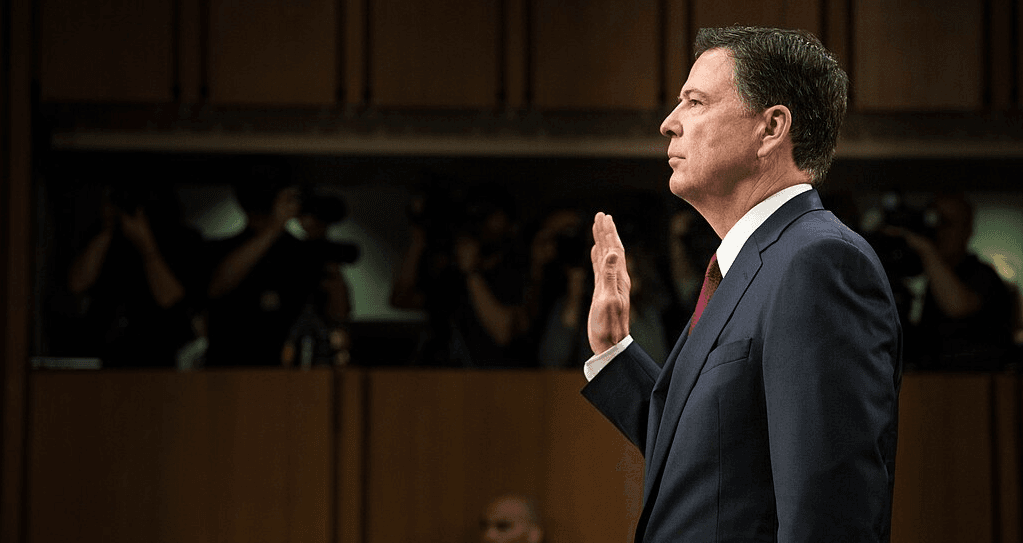
Federal prosecutors revealed a series of November 2016 emails on November 3, 2025, showing then-FBI Director James Comey anticipated serving under President-elect Hillary Clinton and actively guided his confidant, Columbia Law professor Daniel Richman, in leaking information about the Clinton email investigation to The New York Times. The communications, cited in a court filing by Acting U.S. Attorney Lindsey Halligan, directly contradict Comey's prior denials of orchestrating media disclosures and bolster the government's case against him for misleading Congress.
In one email, Comey wrote to Richman shortly after the election: "Some day they will figure it out. And as [Individual 1 and Individual 2] point out, my decision will be one a president-elect Clinton will be very grateful for (although that wasn’t why I did it)." The message referred to Comey's controversial July 2016 decision not to recommend charges against Clinton for her private email server use. Days earlier, Comey praised Richman for his efforts: "Well done my friend. Who knew this would be so uh fun," after Richman confirmed he had "got the point home" to a Times reporter on Comey's actions in the Clinton probe.
The emails emerged in response to Comey's October 2025 motion to dismiss his indictment on grounds of malicious prosecution. Prosecutors argued the documents demonstrate a pattern of Comey using Richman as a conduit for unauthorized leaks, including details on Clinton's emails that shaped public perception during the 2016 campaign. Richman, sworn in as a special government employee in 2017, had no security clearance for classified information but served as Comey's go-between for media contacts.
Comey's case traces back to his tenure as FBI director from 2013 to 2017, marked by high-profile investigations into both Clinton and President Trump. In July 2016, Comey publicly announced no charges against Clinton but criticized her "extremely careless" handling of classified emails, a move that drew accusations of election interference. Privately, the emails suggest Comey viewed his actions through the lens of a forthcoming Clinton administration.
The controversy intensified in 2017 when Comey admitted leaking memos of his private conversations with President Trump—regarding the Russia investigation and potential loyalty pledges—to Richman, who then shared them with the Times. This prompted the appointment of Special Counsel Robert Mueller. Comey testified before Congress in 2020 that he had no involvement in leaks during the Clinton probe and did not authorize Richman to speak to the media.
Prosecutors indicted Comey in September 2025 on one count of making false statements to Congress (18 U.S.C. § 1001) and one count of obstruction of a congressional proceeding (18 U.S.C. § 1505), each carrying up to five years in prison. The charges center on his 2020 Senate Judiciary Committee testimony, where he denied directing leaks about the Clinton emails. The government alleges Comey lied to protect his reputation and mislead lawmakers about FBI practices.
The case, filed in the Eastern District of Virginia, has seen procedural battles. Comey sought dismissal in October, claiming political motivation under the Trump Justice Department. Halligan's filing, supported by the emails declassified from FBI records, counters that the evidence establishes a consistent pattern of unauthorized disclosures. U.S. District Judge Liam O'Grady has scheduled a hearing for November 18 to address the motion.
The revelations add to scrutiny of Comey's legacy, including the 2019 Inspector General report criticizing his handling of the Clinton probe and the 2023 Durham report finding FBI bias in the Trump-Russia investigation. Comey's team maintains the testimony was "literally true" and the prosecution selective. The emails, spanning late October to early November 2016, were obtained through subpoenas in a related FBI leak investigation and provide prosecutors with concrete documentation of Comey's awareness and encouragement of Richman's media contacts.
Like this article