Federal Judges Approve North Carolina's Redrawn Congressional Map, Bolstering GOP Prospects in 2026 Midterms
The unanimous decision denied preliminary injunction requests in two consolidated lawsuits filed by voting rights groups, including the North Carolina State Conference of the NAACP and Common Cause North Carolina, following a mid-November hearing in Winston-Salem.
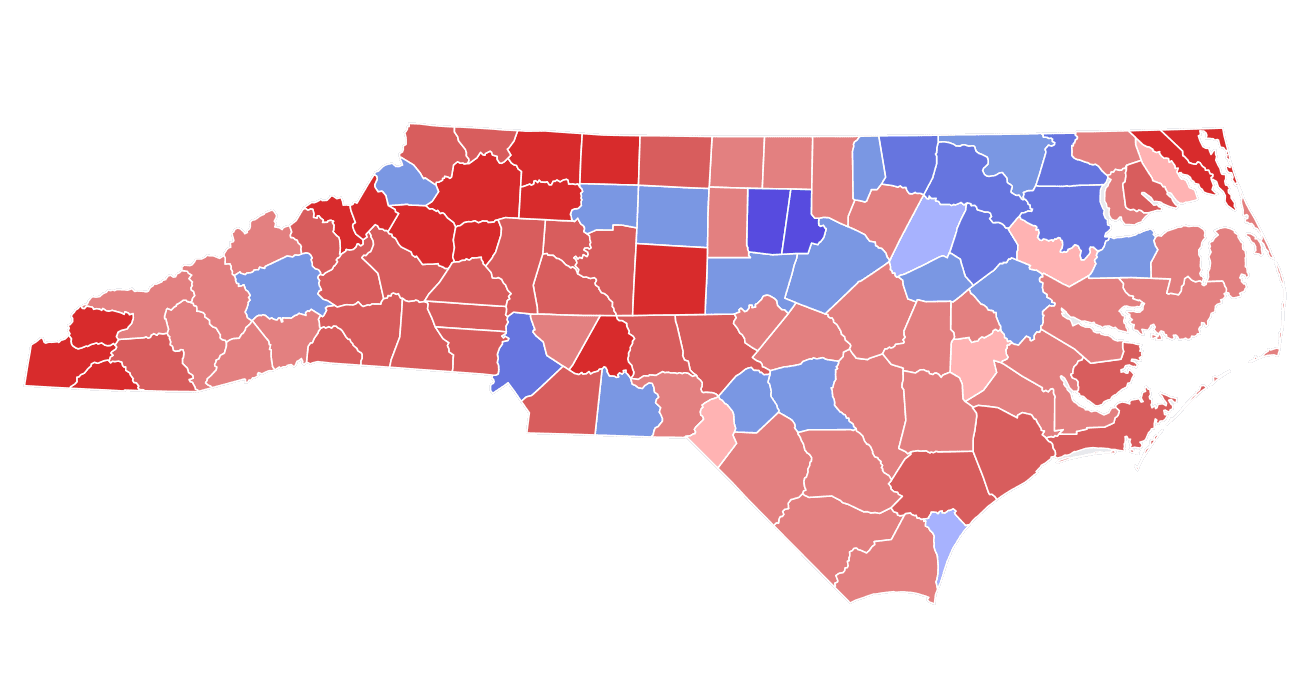
A federal three-judge panel in the U.S. District Court for the Middle District of North Carolina ruled on November 26, 2025, that the state may use its newly redrawn congressional map for the 2026 midterm elections, rejecting challenges alleging racial discrimination and paving the way for Republicans to secure an additional U.S. House seat.
The unanimous decision denied preliminary injunction requests in two consolidated lawsuits filed by voting rights groups, including the North Carolina State Conference of the NAACP and Common Cause North Carolina, following a mid-November hearing in Winston-Salem. The plaintiffs contended that changes to the 1st Congressional District, held by Democrat Don Davis, violated the Fourteenth Amendment and the Voting Rights Act by diluting Black voting power in the state's eastern "Black Belt" region, where Black voters have elected Democratic representatives for over 50 years. The map swaps counties between the 1st and 3rd districts, shifting the 1st District from a Democratic-leaning seat to one projected to favor Republicans by 5 to 10 percentage points based on 2024 election data.
The panel, consisting of U.S. Appeals Court Judge Allison Jones Rushing and District Judges Richard Myers and Thomas Schroeder—all appointed by Republican presidents—issued a 57-page order stating that plaintiffs failed to demonstrate a likelihood of success on racial gerrymandering claims. "Direct evidence shows that the 2025 redistricting was motivated by partisan purposes," the judges wrote, invoking the Supreme Court's 2019 Rucho v. Common Cause decision, which deemed partisan gerrymandering nonjusticiable in federal courts. They also dismissed arguments that the map's rapid enactment—approved by the Republican-controlled General Assembly on October 22, 2025, via Senate Bill 249—evidenced discriminatory intent, noting no evidence of unconstitutional population deviations from 2020 census data.
North Carolina Senate Leader Phil Berger (R-Rockingham) described the ruling as thwarting efforts to "circumvent the will of the people" in a state that supported President Trump in the 2016, 2020, and 2024 presidential elections. The map builds on a 2023 redistricting that netted Republicans three additional seats in 2024, bringing their delegation to 10 of 14. Democratic Gov. Josh Stein, who took office in January 2025, could not veto the legislation, as redistricting bills bypass gubernatorial approval under state law.
This approval forms part of a broader 2025 mid-decade redistricting wave initiated by President Trump to safeguard the GOP's slim House majority ahead of the 2026 midterms, marking the largest such coordinated effort since the early 20th century. Triggered by Texas Republicans' July 2025 map overhaul—aimed at flipping five Democratic seats—the push has spanned over a dozen states, with mixed outcomes amid legal battles and internal party resistance.
In Missouri, Republicans enacted a new map in September 2025 via special session, transforming a Kansas City-area Democratic seat into a Republican-leaning one, though opponents are pursuing a referendum to delay its use until post-2026. Ohio's Redistricting Commission approved marginal adjustments in October 2025, making two districts more competitive for Republicans without aggressive changes. Indiana's effort advanced after initial Senate resistance, with a December 8, 2025, vote pending on a House-passed proposal targeting Democratic incumbents. Florida's legislative committee, meeting in December 2025, considers a map that could add two to three Republican seats, backed by Gov. Ron DeSantis.
Democratic responses have countered aggressively: California voters approved Proposition 50 on November 4, 2025, by 65% to 35%, authorizing a new map to flip up to five Republican seats. New York faces a lawsuit alleging dilution of Black and Latino voting power in Staten Island, potentially forcing revisions. Maryland formed a Governor's Redistricting Advisory Commission in November 2025 to explore gaining a Democratic seat, despite Senate reservations. Virginia and Illinois are eyed for Democratic-led redraws.
Legal hurdles persist nationwide. In Texas, a three-judge panel blocked the GOP map, though the U.S. Supreme Court granted Texas Republicans’ emergency application for a stay, temporarily reinstating the new GOP congressional map pending full review alongside Louisiana v. Callais during the current term. That stay effectively halts the three-judge panel’s November 21 block and allows the map to be used for the 2026 elections unless the Court rules otherwise. Kansas Republicans lack sufficient votes for redistricting, with a January 2026 session as the next opportunity, while New Hampshire's Gov. Kelly Ayotte has halted efforts.
Analysts project that successful Republican redraws in North Carolina, Missouri, and Florida could yield a net House gain of three to five seats, offset by Democratic advances in California and potential elsewhere. The Supreme Court's rulings may ultimately define the maps' viability, with candidate filing for North Carolina's primaries beginning December 1, 2025.
Like this article